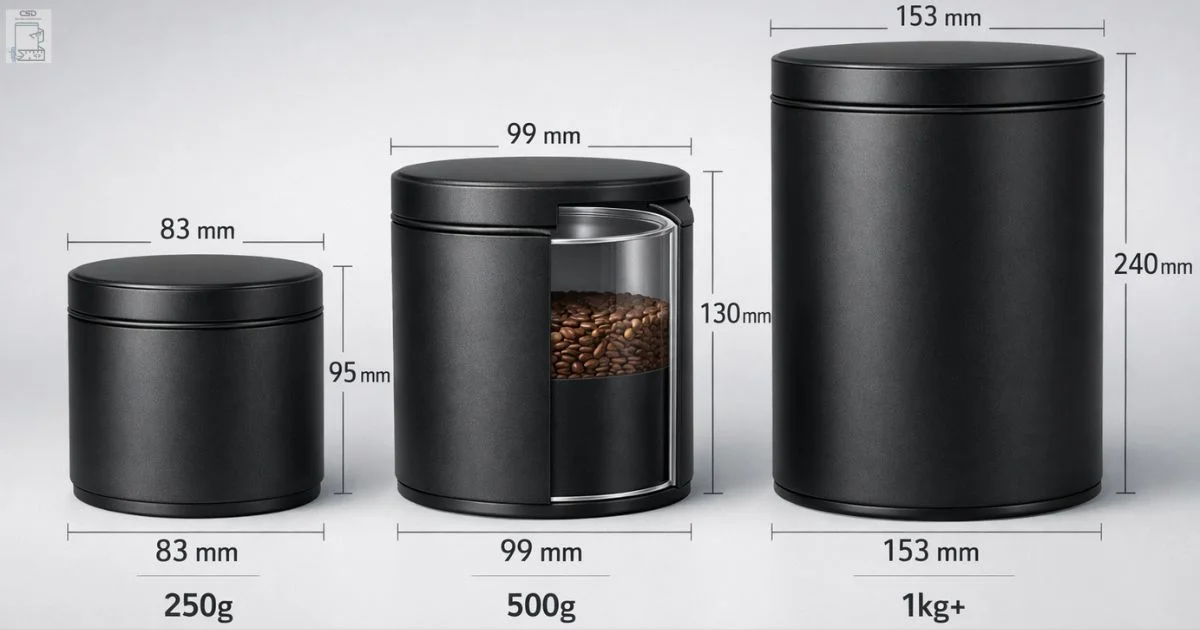
The most common coffee can size measures 83 mm × 95 mm (3.27 × 3.74 inches) and is designed to hold approximately 250 grams of coffee, making it the standard retail format in the USA.
Coffee tins generally range from 65 × 65 mm for small sample packs to 153 × 240 mm for 1 kg commercial containers, with larger dimensions providing greater storage capacity and improved bulk packaging efficiency.
In 2026, brands across the USA are paying closer attention to tin specifications as consumer demand for sustainable, premium packaging grows.
Standard Coffee Can Dimensions
Small (50–125g)
- Diameter: 65–83 mm (2.56–3.27″)
- Height: 65–95 mm (2.56–3.74″)
- Volume: 100–250 ml
Ideal for samples & single-serve.
Medium (250–500g)
- Diameter: 99–120 mm (3.90–4.72″)
- Height: 130–180 mm (5.12–7.09″)
- Volume: 500–1000 ml
Most popular retail size (e.g., 250g at 83×95mm).
Large (1kg+)
- Diameter: 153 mm (6.02″)
- Height: 240 mm (9.45″)
- Volume: 1500 ml+
Bulk commercial favorite.
Coffee Can Sizes Quick Comparison
| Size | Coffee Weight | Diameter | Height | Volume | Best For |
|---|---|---|---|---|---|
| Small | 50–125 g | 65–83 mm (2.56–3.27″) | 65–95 mm (2.56–3.74″) | 100–250 ml | Samples & touch-ups |
| Medium | 250–500 g | 99–120 mm (3.90–4.72″) | 130–180 mm (5.12–7.09″) | 500–1000 ml | Retail (most popular) |
| Large | 1 kg+ | 153 mm (6.02″) | 240 mm (9.45″) | 1500 ml+ | Bulk & commercial |
Naming Convention: Industry uses a 6-digit code (e.g., 307×409) where the first three digits = diameter in sixteenths of an inch, and the last three = height.
Material: Food-grade tinplate, typically 0.21–0.28 mm thick (USA standard ~0.23 mm) for optimal strength vs. weight.
Round cans are preferred for efficient material use and maximum interior volume.
Dimensions are standard ranges; slight variations exist by manufacturer and region. The 83×95 mm (250g) and 153×240 mm (1kg) formats dominate retail and commercial markets.
How Coffee Can Size Affects Product Quality and Shelf Life
Coffee freshness depends heavily on container dimensions. Every tin creates what packaging engineers call “headspace”—the gap between the coffee and the lid.
Diameter matters more than height for aroma retention. A wide, short can exposes more coffee to air during each opening. A tall, narrow design limits exposure and preserves volatile compounds longer.
Tin dimensions also determine how well your product stacks during storage. Poorly proportioned cans waste warehouse space and increase per-unit shipping costs.
Standard dimensions align with pallet configurations used throughout distribution networks.
The material specifications include food-safe interior coatings. Most manufacturers apply BPA-free epoxy resin or water-based varnish.
These coatings prevent metallic taste transfer and protect against moisture. Coating thickness must meet FDA requirements—typically between 5 and 8 microns.
Tamper-evident seals work best with specific dimensional tolerances. Lid diameter must match the can opening within 0.5mm for proper sealing. Loose fits allow air infiltration, while overly tight designs make opening difficult for consumers.
Coffee Tin Dimensions Retail vs Wholesale vs Gift Packaging
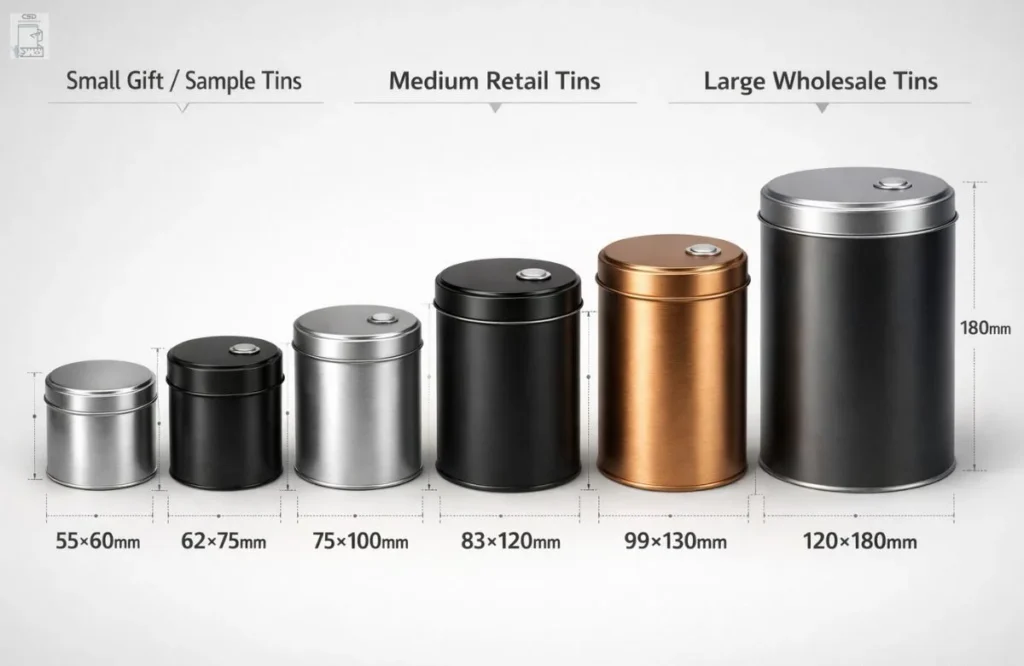
Small format tins (50g–125g) measure between 65×65mm and 83×95mm. These compact sizes work perfectly for sample packs, limited edition blends, and subscription box services.
Gift sets often use smaller dimensions because they look premium without overwhelming customers. E-commerce sellers prefer this range since shipping costs stay low. The 83×95mm format fits standard USPS flat-rate boxes with room for protective padding.
Medium format cans (250g–500g) represent the backbone of retail coffee sales. The 99×130mm size fits grocery store shelves efficiently while holding enough product for regular household use.
Supermarkets allocate shelf space based on standard product dimensions. Cans measuring 99mm in diameter fit six units across on typical 24-inch deep shelving. Height under 150mm allows for double-stacking without blocking sight lines.
Degassing valve compatibility requires careful dimensional planning. One-way valves typically add 3–5mm to lid height. Brands must account for this when calculating total package dimensions and shelf clearance.
Large format tins (1kg+) measure 120×180mm for standard bulk sizes, while commercial suppliers offer 153×240mm for restaurant and café orders. These dimensions optimize pallet stacking—40 units per layer on standard 48×40-inch pallets.
Wholesale coffee packaging prioritizes durability over aesthetics. Thicker gauge metal (0.28mm) prevents denting during freight handling. Tamper-proof lids with audible “pop” seals reassure buyers about product integrity.
2026 Coffee Can Dimension Trends
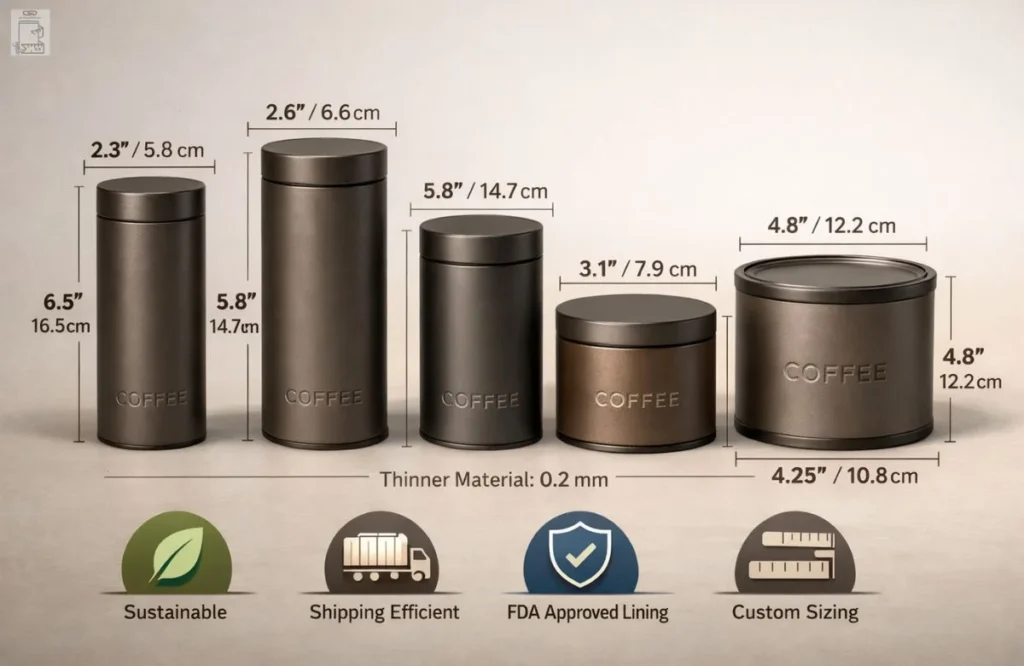
Sustainable packaging drives dimensional choices in 2026. Brands are shifting toward slimmer profiles that reduce material usage by 8–12% compared to traditional designs.
Space-efficient designs help cut transportation emissions. Taller, narrower tins pack 15–20% more units per shipping container. This dimensional optimization reduces per-unit carbon footprint during distribution.
FDA compliance for food contact surfaces has tightened in recent years. All interior coatings must pass migration testing to ensure no harmful substances leach into coffee.
Custom dimensions are becoming more accessible to smaller brands. Advances in tooling technology have dropped minimum order quantities from 50,000 units to as low as 3,000 for some suppliers.
Matte finishes and embossed textures are gaining popularity. These surface treatments don’t change dimensions but require accounting for during design. Embossing can add 0.3–0.5mm to effective diameter, affecting lid fit and stacking calculations.
Other Dimensions: Beverage Can Size Dimension In 2026
FAQ’s
What is the standard can size?
The standard coffee can size for retail packaging measures 83mm diameter by 95mm height for 250g capacity.
What are the dimensions of a tin can?
Coffee tins range from 65×65mm for small gift sizes up to 153×240mm for bulk formats. The most common dimensions are 83×95mm (250g), 99×130mm (500g), and 120×180mm (1kg).
How tall is a coffee can?
Coffee can height ranges from 95mm (3.74 inches) for standard 250g retail tins to 240mm (9.45 inches) for 1kg commercial sizes. Medium 500g cans typically measure 130–180mm tall.
What are the dimensions of a can of beans?
A standard 15oz bean can measures approximately 73mm diameter by 110mm height.
How big is a 250 mL can?
A 250ml coffee can measures 83mm (3.27 inches) in diameter and 95mm (3.74 inches) in height. This volume holds approximately 125 grams of ground coffee.
Why is a can 330ml?
The 330ml size originated in beverage packaging for carbonated drinks, not coffee. This volume became standard for soft drinks and beer globally.
What is the diameter of a can?
Coffee can diameter ranges from 65mm for small gift tins to 153mm for bulk commercial sizes. The most common retail diameters are 83mm (250g capacity) and 99mm (500g capacity).
How tall is a can of beans in centimeters?
A standard bean can measures 11 centimeters tall (110mm).
What size is a 28oz can?
A 28oz can (828ml volume) typically measures 102mm diameter by 178mm height.

I’m the admin of CanSizeDimensions.com, sharing clear and accurate Measurement Guides to make everyday decisions easier. I enjoy simplifying complex dimension details so Readers Can Quickly understand sizes, comparisons, and practical uses. My goal is to provide helpful, reliable information for everyone.