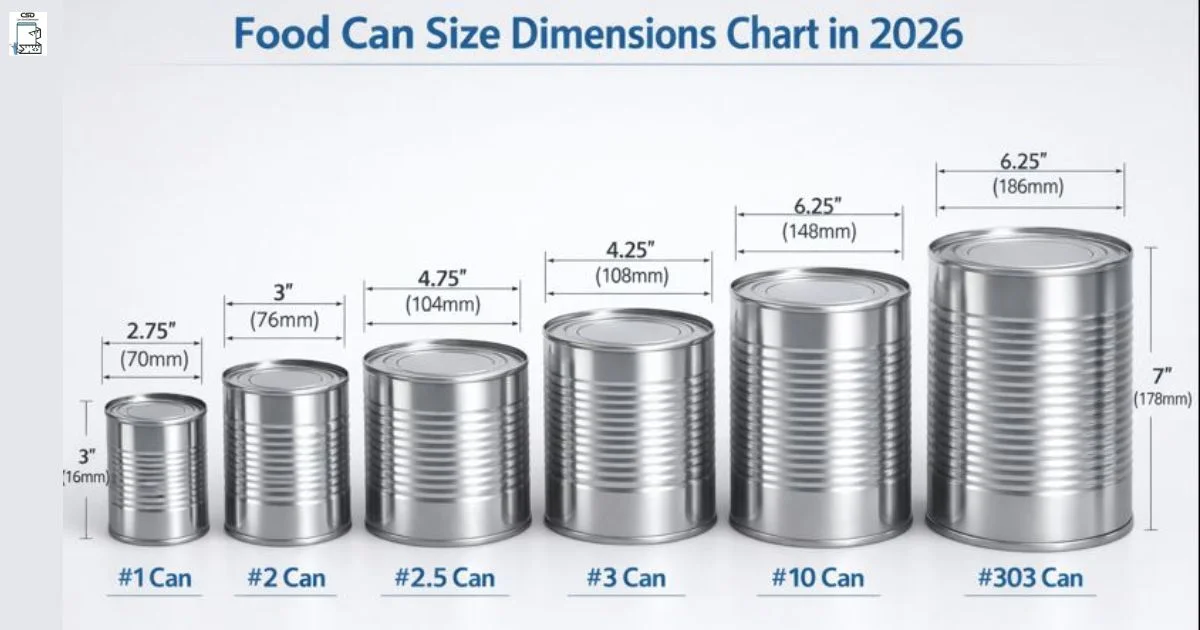
The most common food can size in America is the #2 can, measuring 3.25 inches in diameter and 4.5 inches in height, with a capacity of about 20 ounces (590 mL).
The largest standard food can is the #10 can, measuring 6.25 inches × 7 inches and holding approximately 106 ounces (3.1 liters), making it ideal for restaurants and bulk food storage.
This guide breaks down everything you need to know about can sizes, dimensions, and measurements in simple terms.
Food Can Sizing
Food cans use a unique numbering system that dates back over 100 years. The numbers like #1, #2, or #10 don’t refer to ounces or actual measurements. They’re industry codes that manufacturers use worldwide.
The three-digit format is even more specific. A 303 x 406 can means 3 and 3/16 inches in diameter and 4 and 6/16 inches in height. The first digit shows inches, and the last two digits show sixteenths of an inch.
Common can size numbers include #1, #2, #2.5, #3, and #10. Each serves different purposes from single servings to bulk institutional use. The U.S. canning industry standardized these sizes to make production and storage easier.
Standard Food Can Size Dimensions Chart
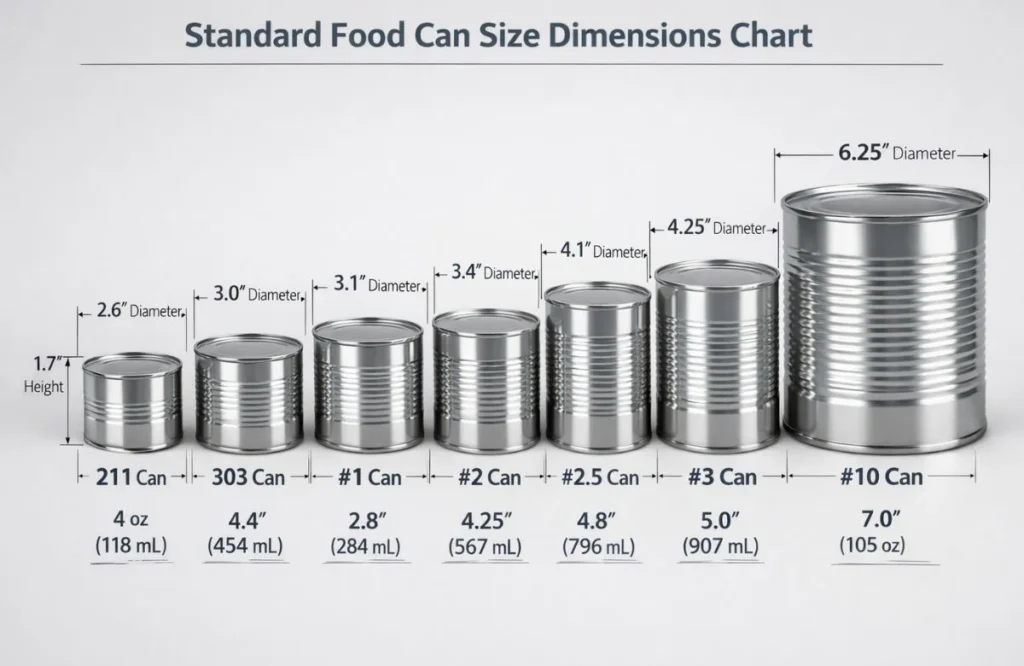
Here’s a complete breakdown of standard food can dimensions used across America:
#1 Can (Picnic Can): Diameter 2.75 inches (70mm), Height 4 inches (102mm), Volume 10-12 oz (295-355mL). Perfect for single servings of soup or fruit.
#2 Can: Diameter 3.25 inches (83mm), Height 4.5 inches (114mm), Volume 20 oz (590mL). The most common size for vegetables, beans, and tomatoes.
#2.5 Can: Diameter 4 inches (102mm), Height 4.75 inches (121mm), Volume 28-29 oz (828-858mL). Great for family-size portions of fruits and pie fillings.
#3 Can: Diameter 4 inches (102mm), Height 5.75 inches (146mm), Volume 51 oz (1.5L). Used for large servings of vegetables and institutional cooking.
#10 Can: Diameter 6.25 inches (159mm), Height 7 inches (178mm), Volume 106 oz (3.1L). Restaurant and bulk storage standard size.
303 Can: Diameter 3 inches (76mm), Height 4 inches (102mm), Volume 15-17 oz (444-502mL). The everyday grocery store size you see most often.
211 Can: Diameter 2.6 inches (66mm), Height 4.9 inches (124mm), Volume 12 oz (355mL). Standard beverage and energy drink size.
440mL Can: Diameter 2.6 inches (66mm), Height 6 inches (153mm), Volume 15 oz (440mL). Popular tall beverage can format.
Most Common Food Can Sizes and Uses
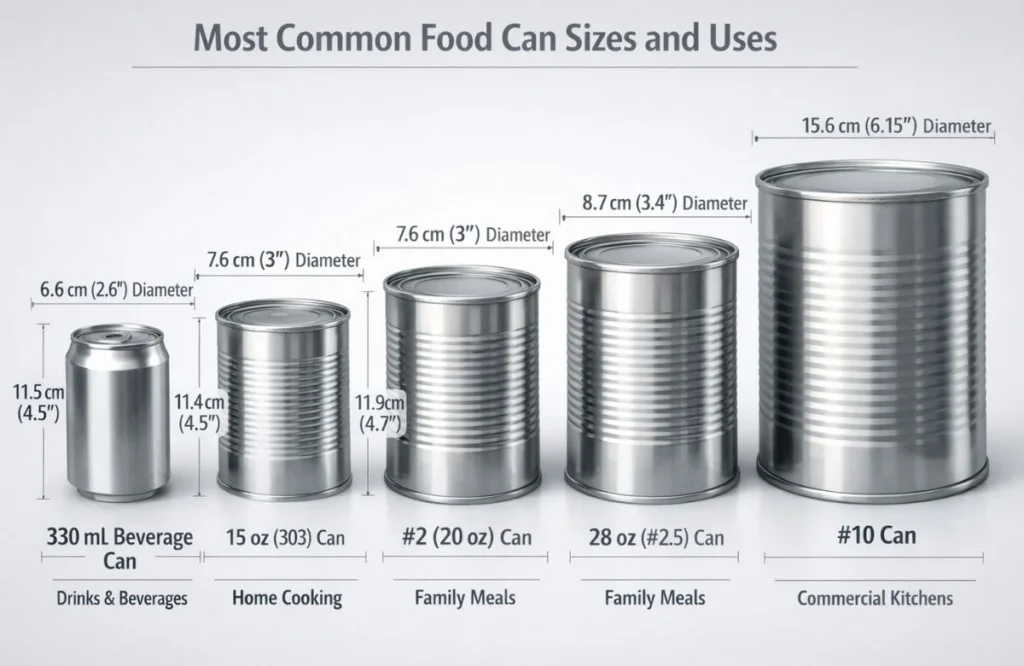
The #10 can dominates commercial kitchens and emergency food storage. It holds about 13 cups of food and serves 25 people. Restaurants buy vegetables, sauces, and beans in this large institutional size.
28 oz cans (#2.5) work perfectly for family meals. One can provides 3-4 servings of fruits, vegetables, or pie filling. The dimensions are 4 inches wide by 4.75 inches tall.
The #2 can (20 oz) is America’s most recognizable food can size. You’ll find corn, green beans, tomatoes, and soups in this format. It measures roughly 3.25 inches across and 4.5 inches high.
15 oz cans (303 size) fit easily in pantries and kitchen cabinets. They’re the standard for beans, diced tomatoes, and condensed soups. Most recipes calling for “one can” mean this size.
330mL beverage cans measure 2.1 inches in diameter and 4.8 inches tall. This standard soda can size is used globally for soft drinks and beer.
How to Measure and Convert Food Can Dimensions
Measuring can diameter requires checking the widest point of the can body, not the rim. Use a ruler or caliper across the center for accuracy. The rim is slightly wider and gives false readings.
Converting inches to millimeters is simple: multiply by 25.4. A 3-inch diameter becomes 76.2mm. For height conversions, use the same formula.
Reading the three-digit code takes practice. The number 303 breaks down as 3 inches plus 3/16 inch diameter. The 406 height means 4 inches plus 6/16 inch (or 4.375 inches total).
Can volume calculations use the cylinder formula: π × radius² × height. But checking the label is faster and more accurate. Manufacturers list fluid ounces and milliliters clearly.
Other Dimensions: CELSIUS Can Size Dimensions In 2026
Question’s
What are the dimensions of a standard food can?
The most common standard food can is the #2 size. It measures 3.25 inches (83mm) in diameter and 4.5 inches (114mm) in height. This size holds 20 fluid ounces (590mL) and appears in most grocery stores for vegetables, beans, and soups.
What size is a 28oz can?
A 28 oz can is called a #2.5 can. It measures 4 inches (102mm) in diameter and 4.75 inches (121mm) tall.
What is a #2 can size?
A #2 can holds 20 fluid ounces (590mL). The dimensions are 3.25 inches diameter and 4.5 inches height.
How big is a can in diameter?
Can diameters range from 2.1 inches (53mm) for small beverage cans to 6.25 inches (159mm) for #10 bulk cans.
How tall is a 330mm can?
A 330mL can (11.2 oz beverage can) stands approximately 4.8 inches (122mm) tall.
What is the size of a tin can in MM?
Tin can sizes in millimeters vary by type. A standard #2 can measures 83mm diameter × 114mm height. A #10 can measures 159mm × 178mm. Beverage cans are typically 53mm × 122mm for 330mL sizes.
What is the most common can size?
The #2 can (20 oz) is the most common food can size in America. It measures 3.25 inches wide and 4.5 inches tall. You’ll find this size used for vegetables, beans, tomatoes, and soups in nearly every grocery store.
Why is it called #10 can?
The #10 can name comes from the old numbering system, not the size. It’s the tenth size in the original industry classification. This large commercial can holds 106 ounces (3.1 liters) and measures 6.25 inches × 7 inches.
What are the dimensions of a 440mL can?
A 440mL can (15 oz) measures approximately 2.6 inches (66mm) in diameter and 6 inches (153mm) in height.

I’m the admin of CanSizeDimensions.com, sharing clear and accurate Measurement Guides to make everyday decisions easier. I enjoy simplifying complex dimension details so Readers Can Quickly understand sizes, comparisons, and practical uses. My goal is to provide helpful, reliable information for everyone.