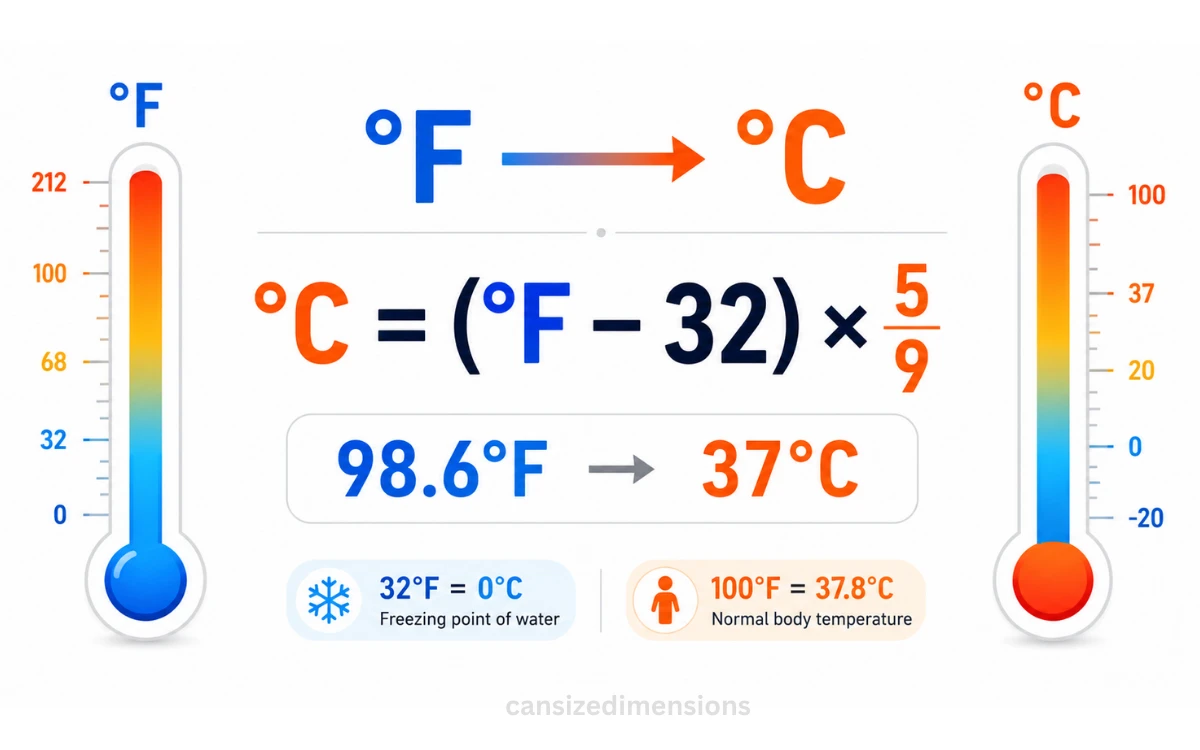
To convert Fahrenheit to Celsius, subtract 32 from the Fahrenheit temperature, then multiply the result by 5/9. The exact formula is °C = (°F − 32) × 5/9.
Two of the most important reference points are 32°F = 0°C (the freezing point of water) and 100°F = 37.78°C, which is just below the clinical fever threshold.
Whether you’re checking a weather forecast abroad, reading a medical thermometer, or following a recipe from a European cookbook — this single formula does it all.
Most Americans grow up reading temperatures in Fahrenheit (°F). But the rest of the world runs on Celsius (°C) — and so does almost every scientific field. Knowing how to switch between the two is a practical life skill, not just a math exercise.
The Exact Formula + Easiest Mental Math Shortcut to Convert Fahrenheit to Celsius
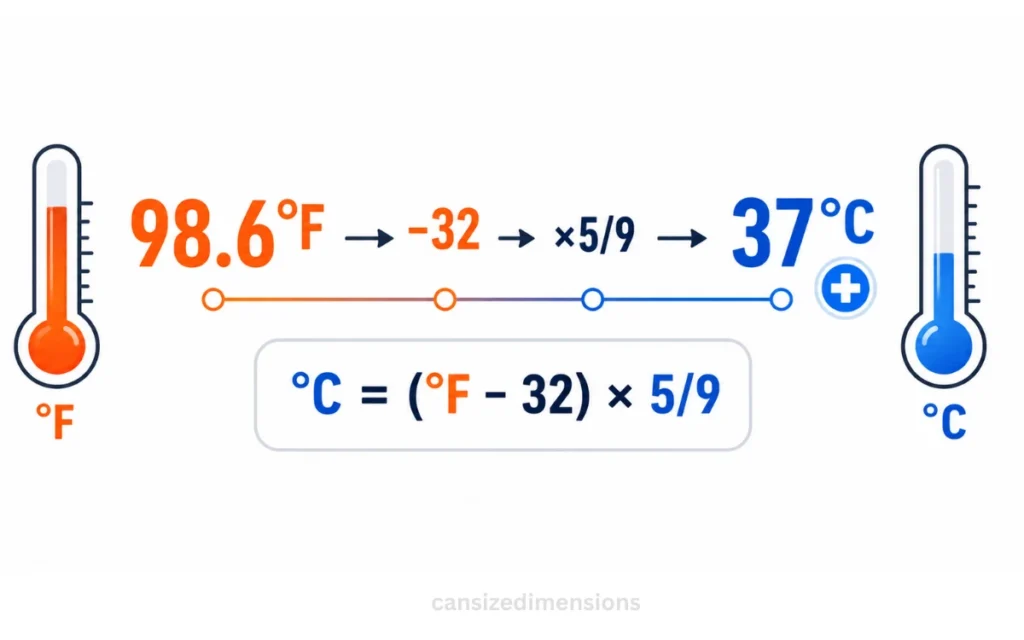
The standard conversion formula is:
°C = (°F − 32) × 5/9
That’s it. Three steps. Subtract, multiply, done.
Formula breakdown:
- Step 1: Take your Fahrenheit temperature
- Step 2: Subtract 32
- Step 3: Multiply by 5/9 (or divide by 1.8 — same result)
Example:
Convert 98.6°F (normal human body temperature) to Celsius:
(98.6 − 32) × 5/9 = 66.6 × 0.5556 = 37°C
That’s why 37°C is the universally recognized normal body temperature in every country outside the United States.
Step-by-Step Conversion Examples (With and Without a Calculator)
Not everyone has a calculator handy. Here are four real-world conversions worked out both ways — with the exact formula and with the mental math shortcut.
The Mental Math Shortcut:
Subtract 30, then divide by 2.
This isn’t perfectly exact — but it gets you within 1–2 degrees, which is close enough for everyday use like reading a weather forecast or guessing the outdoor temperature.
Example 1 — Room Temperature: 72°F
- Exact: (72 − 32) × 5/9 = 22.2°C
- Shortcut: (72 − 30) ÷ 2 = 21°C ✓ Close enough
Example 2 — Human Body Temperature: 98.6°F
- Exact: (98.6 − 32) × 5/9 = 37°C
- Shortcut: (98.6 − 30) ÷ 2 = 34.3°C (shortcut less accurate here — use the formula for medical readings)
Example 3 — Hot Summer Day: 95°F
- Exact: (95 − 32) × 5/9 = 35°C
- Shortcut: (95 − 30) ÷ 2 = 32.5°C ✓ Reasonable estimate
Example 4 — Cold Winter Morning: 14°F
- Exact: (14 − 32) × 5/9 = −10°C
- Shortcut: (14 − 30) ÷ 2 = −8°C ✓ Within range
Key rule: Use the exact formula for medical temperatures, scientific calculations, and cooking.
More Posts:How Much Is a Degree Celsius? Easy Celsius to Fahrenheit Conversion Guide (2026)
What Is 32 Fahrenheit in Celsius — And Why This Number Actually Matters
32°F equals exactly 0°C.
This is the freezing point of water — one of the most important reference points in the entire temperature measurement system.
When Daniel Gabriel Fahrenheit built his scale in the early 1700s, he set 32° as the point where liquid water turns to ice under standard atmospheric pressure. On the Celsius scale — developed by Swedish astronomer Anders Celsius in 1742 — that same point was set at a clean, logical 0°.
So why does the United States still use 32°F instead of 0°C?
The Fahrenheit scale was already deeply embedded in American culture, infrastructure, and industry long before metrication became a global standard.
Why 32°F / 0°C matters practically:
- It tells you when roads ice over — critical for winter driving safety
- It’s the threshold for frost advisories issued by the National Weather Service
- It determines food safety storage — the USDA recommends keeping freezers at or below 0°F (−17.8°C) to safely store meat and perishables
- It’s the baseline for cold chain logistics in pharmaceutical shipping and food distribution
Understanding this reference point doesn’t just help with math — it helps you read weather alerts, understand food storage guidelines, and stay safe in winter conditions.
Fahrenheit to Celsius Conversion Chart — The Most Common Temperatures You’ll Actually Use
Here are the most searched and most practically useful F° to C° values — organized so you can scan and save them.
Freezing & Cold:
- 32°F = 0°C — Freezing point of water
- 14°F = −10°C — Very cold winter day
- −4°F = −20°C — Extreme cold / blizzard conditions
Cool to Comfortable:
- 50°F = 10°C — Cool autumn morning
- 59°F = 15°C — Mild spring day
- 68°F = 20°C — Comfortable indoor room temperature
- 72°F = 22.2°C — Ideal thermostat setting (most U.S. households)
- 77°F = 25°C — Warm, pleasant outdoor temperature
Hot & Fever Range:
- 95°F = 35°C — Very hot summer day
- 98.6°F = 37°C — Normal human body temperature
- 100°F = 37.78°C — Low-grade fever territory
- 100.4°F = 38°C — Clinical fever threshold (CDC)
- 104°F = 40°C — High fever / dangerous heat exposure
Boiling & Cooking:
- 212°F = 100°C — Boiling point of water at sea level
- 325°F = 162.8°C — Low oven (slow roasting)
- 350°F = 176.7°C — Standard baking temperature
- 400°F = 204.4°C — High-heat roasting
- 450°F = 232.2°C — Broiling / pizza oven temp
More Posts:How Many Cups in a Pint? (With Real-Life Examples & Conversions) 2026
When You’re Traveling, Cooking, or Checking the Weather
For International Travelers
If you’re visiting France, Germany, Japan, Australia, or almost anywhere outside the U.S., weather apps and forecasts will show Celsius. A forecast of 28°C sounds cold if you’re used to Fahrenheit — but it’s actually a warm 82.4°F day. Use the shortcut: add 30, then double it for a rough °C to °F reverse check.
For Home Cooks and Bakers
European recipes, BBC Good Food, and most international cookbooks list oven temps in Celsius. A recipe calling for 180°C is asking for 356°F — essentially your standard 350°F baking setting. Always convert before preheating.
For Health and Fever Monitoring
The most important numbers to memorize are 98.6°F = 37°C (normal) and 100.4°F = 38°C (fever). Everything above 103°F (39.4°C) in adults warrants medical attention, according to the Mayo Clinic.
FAQ’s About Fahrenheit to Celsius Conversion
How do you convert Fahrenheit to Celsius?
Subtract 32 from the Fahrenheit value, then multiply by 5/9.
Formula: °C = (°F − 32) × 5/9.
Example: 68°F → (68 − 32) × 5/9 = 20°C.
What is 32 Fahrenheit in Celsius?
32°F = 0°C.
This is the freezing point of water — the same temperature on both scales, just written differently.
What is 100 Fahrenheit in Celsius?
100°F = 37.78°C.
This is just below the clinical fever threshold of 100.4°F (38°C) defined by the CDC.
Converting Fahrenheit to Celsius Is Easier Than You Think
The formula °C = (°F − 32) × 5/9 is all you need. Remember the two anchor points — 32°F = 0°C (freezing) and 98.6°F = 37°C (body temperature) — and every other conversion becomes easier to estimate.
Use the exact formula when precision matters — medical readings, cooking, scientific work. Use the mental math shortcut (subtract 30, divide by 2) when you just need a quick answer on the go.
Temperature literacy is a life skill. Whether you’re traveling abroad, monitoring a fever, adjusting an oven, or reading a foreign weather app — knowing how to convert Fahrenheit to Celsius instantly puts you in control.

I’m the admin of CanSizeDimensions.com, sharing clear and accurate Measurement Guides to make everyday decisions easier. I enjoy simplifying complex dimension details so Readers Can Quickly understand sizes, comparisons, and practical uses. My goal is to provide helpful, reliable information for everyone.